
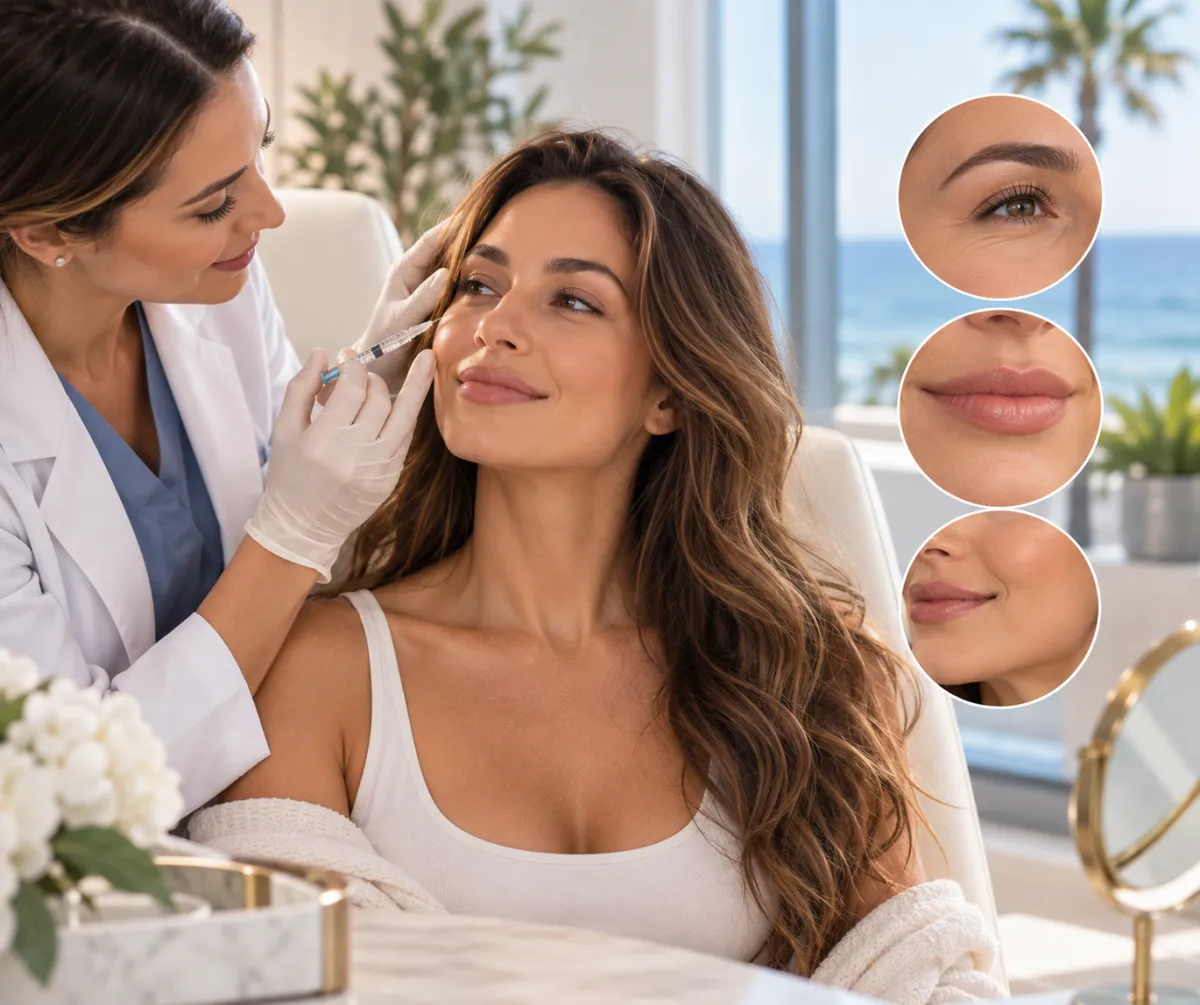
The Rise of Natural-Looking Injectables: Subtle, Balanced Aesthetic Results
The Rise of Natural-Looking Injectables: Why Subtle Results Are In
For years, injectable treatments were often associated with dramatic transformations—very full lips, highly defined cheeks, or an unmistakably “done” appearance.
Today, the conversation is changing.
More people are looking for something different: to look refreshed without looking overdone.
The rise of natural-looking injectables reflects a broader shift in aesthetic medicine toward subtle enhancement, facial balance, individualized treatment plans, and preserving the characteristics that make each face unique.
Instead of asking, “How much can we change?” patients are increasingly asking, “What can we enhance while still looking like myself?”
That shift has made techniques such as carefully placed neuromodulators and strategically used dermal fillers increasingly important in modern aesthetic care.
What Are Natural-Looking Injectables?
Natural-looking injectables aren't necessarily a specific product or treatment.
Rather, the term describes an aesthetic approach.
The goal is to make carefully considered improvements while maintaining natural facial movement, proportions, and individuality.
Depending on a patient's needs, an injectable treatment plan may include:
Neuromodulators to temporarily reduce the appearance of certain expression lines
Dermal fillers to restore or enhance facial volume
Lip enhancement focused on shape and proportion rather than simply adding volume
Cheek or chin enhancement to improve overall facial balance
Treatment of areas affected by age-related volume changes
A combination of treatments designed around the patient's facial anatomy
Dermal fillers can be used for specific FDA-approved facial indications, including improving the appearance of certain wrinkles and folds and adding fullness to areas such as the lips, cheeks, and chin.
The objective isn't necessarily to make someone look dramatically different. It's about creating a result that feels harmonious with the rest of the face.
Why Are Subtle Results Becoming So Popular?
1. Patients Want to Still Look Like Themselves
One of the biggest changes in aesthetic preferences is the desire for authenticity.
Someone may want smoother forehead lines but still want natural facial expression.
Another person may want slightly more lip definition without dramatically changing the shape of their lips.
Someone else may want to restore facial volume without appearing noticeably fuller.
This is where personalized treatment becomes important.
Rather than applying the same technique to every patient, an experienced injector can evaluate facial structure, movement, proportions, skin quality, and individual goals before recommending treatment.
The American Academy of Dermatology notes that properly performed filler treatments can produce natural-looking results, with patients appearing refreshed rather than obviously treated.
2. "Frozen" Is No Longer the Goal
Neuromodulators such as Botox® and other botulinum toxin products work by temporarily reducing targeted muscle activity.
When appropriately dosed and placed, the goal isn't necessarily to eliminate every expression.
Instead, treatment can be designed to soften the appearance of certain dynamic lines while allowing natural facial movement to remain.
The American Academy of Dermatology explains that dermatologists aim to use enough product to relax targeted muscles without unnecessarily affecting other muscles, helping patients maintain natural facial expressions.
This approach can be particularly appealing to patients who want to look rested, refreshed, and polished—not expressionless.
3. Fillers Are Becoming More Strategic
The modern approach to dermal fillers isn't simply about adding volume.
Placement matters.
An experienced injector considers how different areas of the face relate to one another. For example, subtle changes to one area may influence the overall appearance of facial proportions.
Depending on the patient, a treatment plan might focus on:
Lips
Instead of simply increasing size, treatment may focus on subtle definition, symmetry, hydration, or proportion.
Cheeks
Strategic volume can be used to address certain areas of volume loss or enhance facial contours.
Chin
Subtle enhancement may help create greater balance between the chin, lips, nose, and lower face.
Facial folds
Certain fillers may be used to improve the appearance of moderate-to-severe facial wrinkles or folds when appropriate.
The FDA emphasizes that dermal fillers are medical procedures and that different products have specific approved uses and treatment areas.
Facial Balancing vs. Changing Your Face
One reason natural-looking injectables have gained attention is the concept of facial balancing.
Facial balancing focuses on how the features work together rather than treating one feature in isolation.
For example, a patient may initially think they need more lip volume when the underlying concern is actually the relationship between the lips, chin, and surrounding facial structure.
A personalized consultation can help determine whether an injectable treatment is appropriate—or whether another aesthetic treatment may be a better option.
This is one reason a thoughtful treatment plan is often more valuable than simply choosing a product from a menu.
The Importance of "Less Is More"
Natural-looking results often require restraint.
Adding more product doesn't automatically produce a better outcome.
In fact, over-treatment can change facial proportions and create an appearance that doesn't align with the patient's original goals.
A conservative approach may involve:
Using smaller amounts of product
Treating only selected areas
Spacing treatments appropriately
Assessing results before considering additional treatment
Prioritizing facial harmony
Preserving natural movement
Considering skin quality alongside volume and muscle movement
Sometimes the best injectable treatment is the one that other people don't immediately notice.
Natural-Looking Does Not Mean Risk-Free
It's important to remember that injectable treatments are medical procedures.
Dermal fillers can cause temporary effects such as swelling, bruising, redness, tenderness, and discomfort. Rare but serious complications can occur, including accidental injection into a blood vessel, which can result in tissue damage, vision problems, blindness, or stroke.
Botulinum toxin products also have potential side effects, including localized pain, swelling, bruising, eyelid or brow drooping, and other complications.
That's why choosing an appropriately trained and experienced medical professional is an essential part of the process.
The FDA recommends working with a licensed healthcare provider who has experience with dermal filler injections, understands facial anatomy, and can explain both benefits and risks.
What Makes an Injectable Treatment Look Natural?
Several factors can influence the final appearance.
Facial Anatomy
Every face is different. Bone structure, soft tissue, skin thickness, muscle movement, and natural proportions all influence treatment planning.
Product Selection
Different injectable products have different characteristics and approved uses. The appropriate product depends on the treatment area and the patient's goals.
Injection Technique
Placement, depth, amount, and technique can all influence the result.
Experience
A skilled injector needs more than familiarity with the product. Understanding facial anatomy and recognizing how treatment can affect surrounding structures is critical.
Patient Goals
Perhaps most importantly, the provider and patient need to have the same vision of what "natural" means.
For one person, that may mean softening forehead lines. For another, it may mean subtle lip definition or restoring volume that has changed over time.
Natural-Looking Injectables Are About Personalization
There is no universal injectable treatment that works exactly the same way for everyone.
A 30-year-old patient seeking subtle preventative treatment may have very different goals from someone interested in addressing age-related volume loss.
Likewise, someone interested in lip enhancement may have completely different priorities from someone concerned about facial lines.
A consultation allows the provider to consider:
Current facial anatomy
Skin condition
Facial movement
Previous aesthetic treatments
Medical history
Medications and supplements
Desired outcome
Appropriate treatment options
Potential risks and limitations
The American Academy of Dermatology recommends discussing previous cosmetic treatments and medications or supplements with the provider before receiving filler treatment.
The New Aesthetic Philosophy: Enhancement, Not Transformation
The growing interest in natural-looking injectables represents more than a temporary beauty trend.
It reflects a broader change in how people think about aesthetic medicine.
The goal is increasingly about enhancing rather than replacing.
Instead of completely changing facial features, patients may want to maintain what makes their face recognizable while addressing specific concerns.
That might mean:
Softer lines.
Subtle definition.
Balanced proportions.
Natural movement.
Refreshed appearance.
And sometimes, the best compliment isn't:
"What did you have done?"
It's:
"You look amazing. Did you get some extra sleep?"
How to Know If Natural-Looking Injectables Are Right for You
If you're considering injectables, start with a consultation rather than choosing a treatment based solely on social media trends.
A qualified provider can help determine:
What you want to improve
Whether an injectable is appropriate
Which type of treatment may best address your concern
How much treatment may be appropriate
What results are realistic
What risks and downtime may be involved
Whether a different treatment may provide a better option
The best aesthetic plan should be based on your face—not someone else's before-and-after photo.
Frequently Asked Questions
Do natural-looking injectables mean using less product?
Not necessarily. Natural-looking results depend on appropriate product selection, placement, technique, facial anatomy, and treatment goals—not simply the amount used.
Will Botox® make my face look frozen?
It doesn't have to. When appropriately administered, botulinum toxin can soften targeted muscle activity while allowing natural facial expressions to remain.
Can dermal fillers look natural?
Yes. The American Academy of Dermatology notes that properly performed filler treatments can produce natural-looking results.
How long do dermal fillers last?
Duration varies depending on the filler material, treatment area, and individual factors. Many fillers are temporary and are gradually absorbed by the body.
Are injectable treatments safe?
All medical procedures carry risks. Dermal fillers and botulinum toxin products should be administered by appropriately trained healthcare professionals using approved products and appropriate techniques.
Should I get filler because it's trending?
Not necessarily. A treatment should be based on your individual anatomy, goals, medical history, and a professional assessment—not simply what's popular online.
Your Best Result May Be the One That Still Looks Like You
The future of aesthetic medicine isn't necessarily about looking different.
It's about looking like the best, most refreshed version of yourself.
Natural-looking injectables place the emphasis on balance, proportion, subtlety, and individualized care. When thoughtfully planned and performed by a qualified provider, injectable treatments can become one part of a broader approach to facial rejuvenation.
At Coastal Wellness Collective, aesthetic care can be approached as a personalized experience—one designed around your goals, your features, and the look you want to achieve.
Ready to explore a more natural approach to facial aesthetics?
Visit CoastalWellnessStPete.com or call 727-209-7110 to schedule a consultation.

Amenties
Spa-like finishes and natural light
High quality, sound-mitigating construction
Client waiting area
Long-term and flexible hourly rentals
Break room for decompressing
Get in touch
One Collective Spa located near Tampa Bay Beaches!
4004 Park St N, St. Petersburg, FL 33709
Coastal Wellness Collective is a curated wellness sanctuary offering premium Aesthetic and Wellness services all-in-one, restorative experience for clients. Our community brings together experts dedicated to elevating the well-being of others.


© Copyright 2025. Coastal Wellness Collective. All rights reserved.